Cash at the Door, Chaos on the Rail: Inside Britain's Sample Sale Stampede
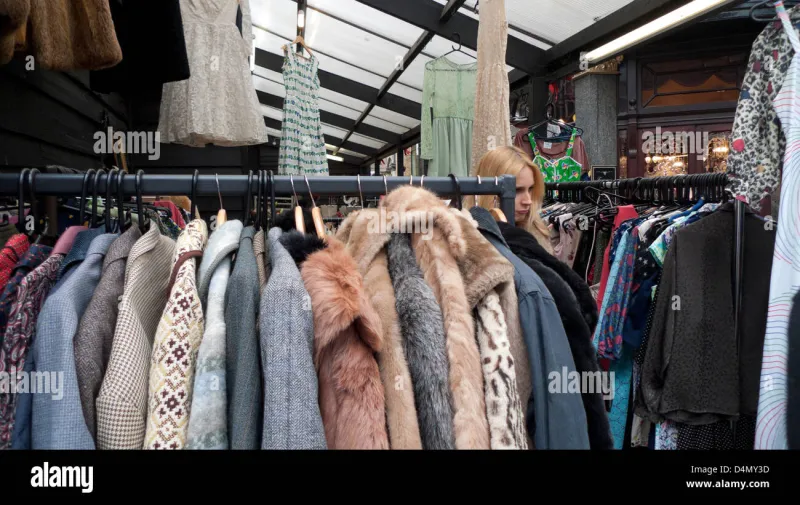
Photo: crowded vintage clothing sale warehouse rail browsing clothes London, via c8.alamy.com
There's a moment at every good sample sale that no drop notification will ever give you. It's about forty minutes in, when the initial stampede has thinned out and someone holds up a heavyweight hoodie across the room, silently asking if it's your size. You shake your head. They nod, put it back, and move on. That's it. That's the transaction. No bot beat you, no restock sold out in 0.3 seconds, no Scalper McScalpface has relisted it at triple the price. Just fabric, eye contact, and a fiver changing hands.
Welcome to Britain's sample sale circuit — the last corner of streetwear where the maths still makes sense.
What Actually Is a Sample Sale?
Strip away the hype and it's simple: brands — big, small and everything in between — shift off-cuts, prototypes, last season's stock and one-off samples at a fraction of retail. We're talking £80 samples that would've cost £300 on resale apps, £15 tees from labels you've only ever seen on your Explore page, and the occasional grail that makes you question every financial decision you've ever made.
The circuit has exploded post-pandemic. London's got the obvious suspects — the Brick Lane and Hackney warehouse events that draw queues round the block before the doors even open. But the scene's spread well beyond the M25. Manchester's railway arches host regular sales from local labels and bigger brands alike. Birmingham, Leeds, Glasgow and Bristol all have their own growing calendar. If there's a disused industrial unit within a ten-minute walk of a train station, chances are someone's flogging samples in it this weekend.
Why It Feels Like the Last Honest Marketplace
Let's be honest about what online drops have become. Silent drops with zero warning. Bots hoovering up stock before a human finger can reach the checkout. Resale platforms where the 'retail' price is basically a rumour. It's exhausting, and if you're on a Gen Z budget, it's often completely rigged against you.
The sample sale flips all of that.
Cash at the door (or at least a card reader that works) means no checkout crashes at 10:59. Physical try-ons mean no 'runs small, size up' roulette — you know exactly how that boxy fit sits on your actual shoulders. No algorithm decides who gets what; it's just first through the door and quickest hands on the rail. And crucially, there's no resale layer. Most events have unwritten rules against buying to flip, and the crowd polices it better than any platform ever has. Grab five of the same tee in different sizes and you'll feel the room's eyes on you.
There's also something properly social about it that a drop page can't replicate. People chat in the queue. Someone tells you where the good hoodies are hiding. You leave with a fit and a story, not just a dispatch confirmation.
The Strategy: How to Actually Score
Turn up clueless and you'll leave with a tote bag and regret. Turn up with a plan and you'll eat. Here's the playbook:
1. Do your homework on timings. Most events run over a weekend, often Friday through Sunday. The Friday morning session is for the serious heads — best stock, biggest queues. Sunday afternoon is where the real bargains live, because brands would rather shift the last rail at 50% off than pack it back into a van. Decide what you're optimising for: grails or volume.
2. Queue early, but not stupid early. Two hours before doors gets you in the first wave at most mid-size events. Six hours gets you frostbite and diminishing returns. Check the event's socials — the queue photos from previous editions tell you exactly how hardcore it gets.
3. Dress for the mission. Sounds obvious, but wear a fitted tee and shorts or joggers you can whip off in a crowded room. Some events have changing rooms; many don't, and the queue for the one portaloo-cum-fitting-room is longer than the entry queue. Layers you can shed over your outfit are the move.
4. Do a lap, then hunt. The instinct is to grab at the first rail you see. Resist. Do one full loop of the venue, clock where the size-sorted sections are, then commit. The pieces that matter are usually on the back wall or under a table — the front rails are decoys.
5. Bring cash and a sturdy bag. Card machines at warehouse events have a 60% survival rate. And a foldable tote beats juggling an armful of hoodies while you dig through a size bin.
6. Check the sample itself. This is the bit people forget. Samples are prototypes — check stitching, zips and prints properly. Most are fine, occasionally better than retail, but you're buying as-is. No returns, no exchanges, no takebacks.
The Bigger Picture
There's a reason these events keep selling out while the big online drops get more hostile by the season. The sample sale circuit is streetwear with the friction removed — no gatekeeping, no scalping, no waiting for a restock that's never coming. It's the closest thing the scene has left to its roots: a room full of people who care about the clothes, trading on enthusiasm rather than budget.
Is it chaotic? Massively. Will you get elbowed over a medium? Possibly. Will you walk out with a £300 piece for £80 and a story about the bloke who nearly fought a teenager over a North Face sample? Absolutely.
Check the circuit listings, rally the group chat, and get there early. The rail doesn't wait.